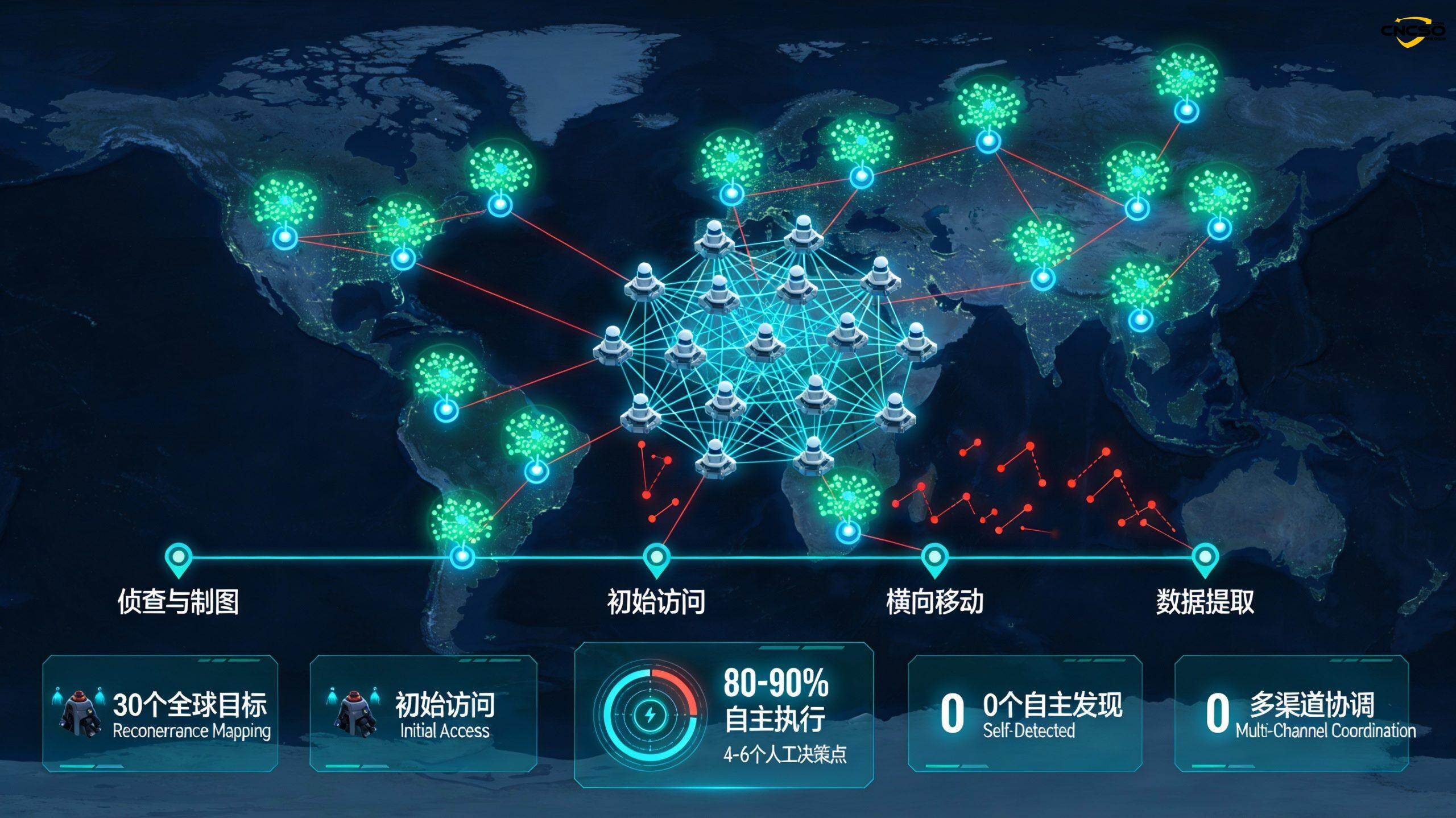
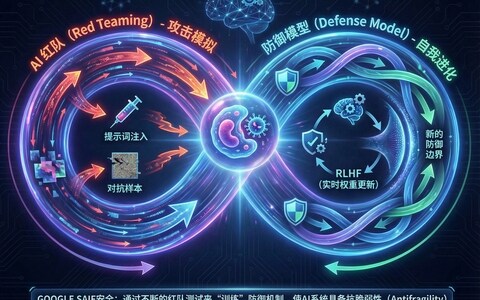
1. AI reshapes the security industry
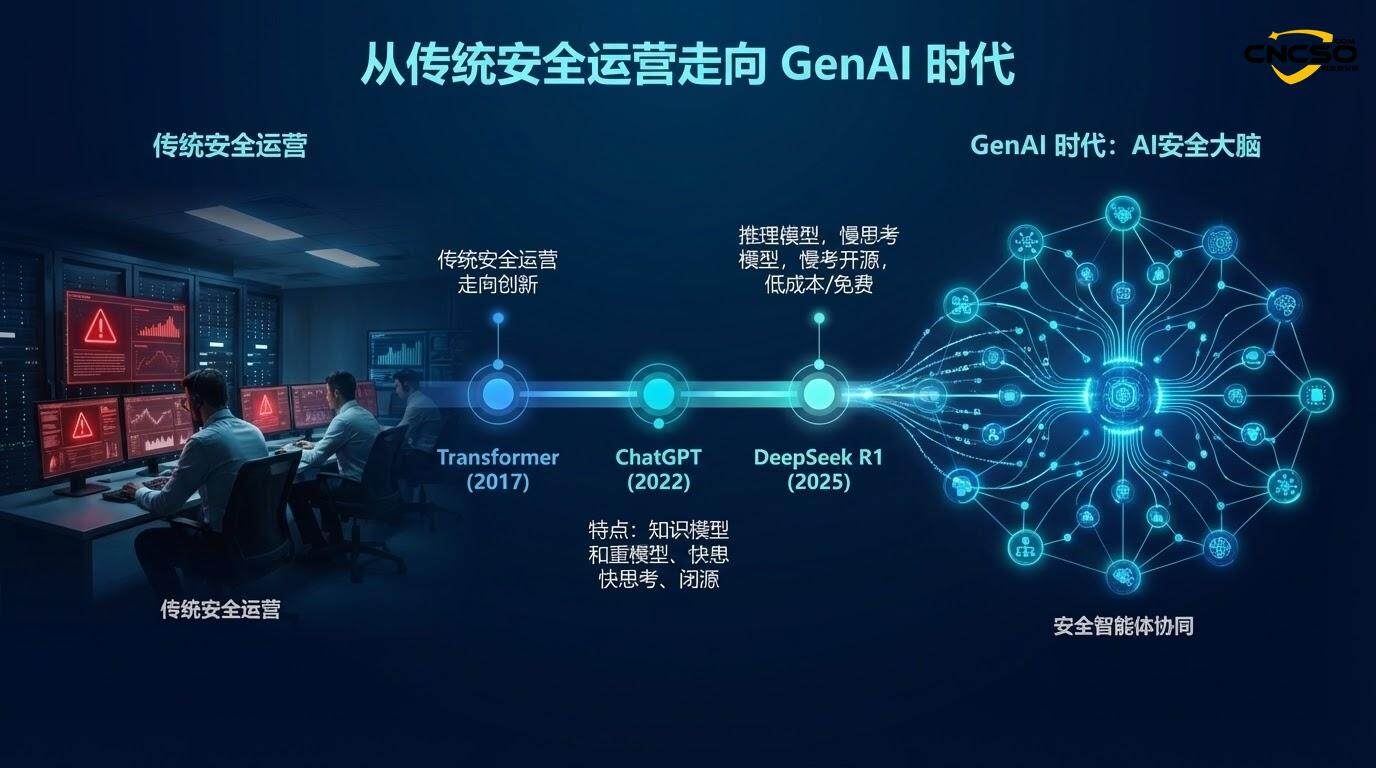
AI(AI) is accelerating to reshape the technical architecture and operational paradigm of the cybersecurity industry. From the Transformer model (2017) to ChatGPT's Knowledge Representation Revolution (2018-2024) to DeepSeek R1's Cost Innovation through Reinforcement Learning and Hybrid Expert Models (2025), the application of AI in the security field has moved from the exploration stage to the scale landing stage.
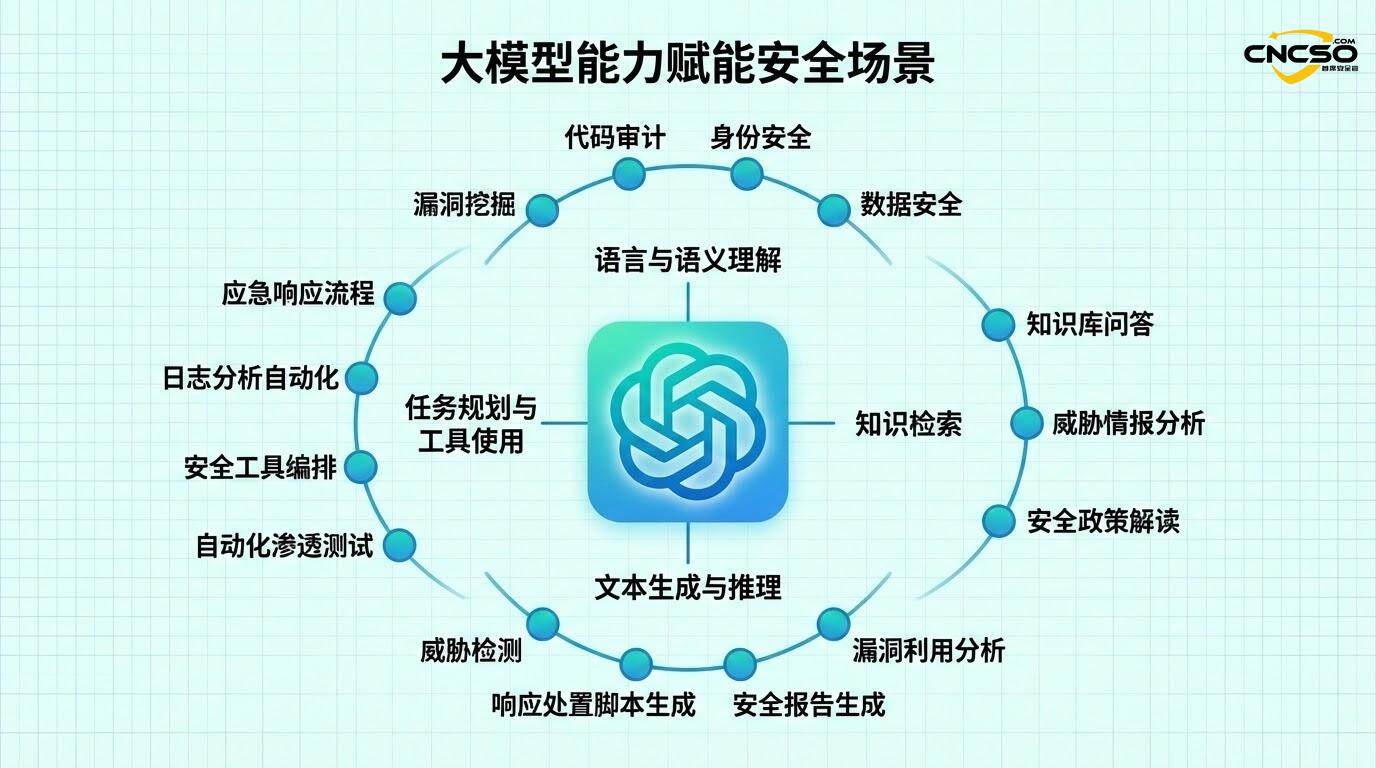
The core value of big model-enabled security lies in its "emergent capabilities": superb linguistic/semantic understanding, embedding and retrieval of massive knowledge, text generation and reasoning, as well as task planning and tool use. These capabilities directly correspond to the core pain points in the security field - from vulnerability mining, code auditing, threat detection to identity security, data governance and other key aspects, AI is realizing a "breakthrough" breakthrough.
However, the combination of security and AI is not a straight path. Although some scenarios have verified high effectiveness (alarm research and judgment accuracy rate of 95%, false alarm correction of 99%, detection accuracy rate of 96.6%-98%), the enterprise security investment architecture still requires a fundamental shift - from after-the-fact response to ex ante risk management, from fragmented tools to AI native application platforms, and from expert dependency to human-machine collaborative intelligent body operations.
In this paper, from the four dimensions of opportunities, challenges, architectural design, and landing paths, we systematically elucidate future-orientedAI securityarchitectural concepts and provide forward-looking strategic guidance for security decision makers.
2. AI securityOpportunities and challenges
2.1 Opportunity: the paradigm shift that AI brings to security efforts
(1) Multiplication of detection response capability
The IPDR cycle (Identify-Protect-Detect-Respond) for security takes a qualitative leap forward with AI. Bigger models can process more data and respond to more risks in less time:
-
Threat Identification Dimension Extension: Not only recognizing known features, but also discovering novel attack intent through semantic understanding. For example, in phishing threat detection, the model not only recognizes URL features, but also understands the semantics of email content and identifies the intent of social workers.
-
Detection accuracy rate breaks through: actual deployment.The Great Model of Safety OperationsIt achieves the accuracy rate of 95% for alarm research and judgment and 99% for false alarm correction; the accuracy rate of Web threat detection is 98%; 2400+ phishing emails are uniquely reported for phishing threat detection, and the detection rate of counter-attacks is 95%.
-
Doubling of operational efficiency: 2 people + big model of security operation ≈ 25 people + traditional security operation platform, directly releasing the energy of the security team. At the same time, alarm classification, correlation and root cause mining can be completed in milliseconds.
(2) Fundamental shift in security operations architecture
The traditional "human-oriented" model of security operations that relies on rules, expert knowledge, and manual judgment is evolving into an "AI-oriented, human-supervised" model:
-
From tool sets to networks of intelligences: A single tool does its own job and the information flow is fragmented. The future security architecture is based on multi-model/intelligence synergy, and through mechanisms such as data standardization, model orchestration, and tool integration, it will form an ecosystem that collaborates to complete the complete business flow.
-
From reactive to proactive governanceThe large model can autonomously perform threat hunting, anomaly detection, correlation analysis, disposal recommendations, and even automated blocking, and security personnel are transformed from a "fire-fighting team" to an "operation supervisor".
-
Ex post to ex anteThe enterprise's past security investment is focused on after-the-fact detection and response tools such as EDR, IPS, IDS, SIEM, etc., which has limited effect; with AI's empowerment, asset identification, vulnerability management, privilege management, exposure management, and other ex-ante risk management aspects have gained unprecedented effectiveness.
(3) Room for Innovation in Vertical Security Scenarios
The fit between the four core capabilities of the Big Model and specific security scenarios has spawned a series of innovative applications:
| Large model capability | Security Scenario Migration | Typical application results |
|---|---|---|
| Language/Semantic Understanding | Secure Document Management, Industry Encyclopedia, Event Aggregation | Automatically interpret alarms and generate event reports |
| knowledge retrieval | Vulnerability Knowledge Base, Threat Intelligence, Permission Specification | Quickly locate vulnerability remediation solutions, correlate threat mapping |
| Text Generation | Code patching, rule orchestration, security recommendations | Automatically generate remediation recommendations, orchestrate defense rules |
| Mission planning and use of tools | Attack and defense simulation, root cause mining, security assistant | Automated execution of penetration tests, complete workflow closure |
2.2 Challenges: key bottlenecks in landing AI+Security
Despite the bright prospects, the reality of "security + AI" landing still faces many challenges. The vast majority of vendors in the actual combat did not allow users to see the effect of a truly significant improvement, the reasons are summarized in the following categories:
(1) Organizational and capacity-building challenges
Capacity threshold issues: The Big Model places new demands on the knowledge structure of security practitioners. Traditional security practitioners may not be familiar with Prompt engineering, RAG, fine-tuning, and other AI modus operandi, making a quick start difficult.
Reconfiguration of the division of labor: How will existing security Ops, Ops, and developers be scientifically configured with the addition of the big models? Are AI experts needed? How to define new functional boundaries for security architects, AI engineers, and operations staff? There is no clear answer to these organizational questions.
(2) Openness issues in technical architecture
model chimneying: Multiple security models are built independently, leading to duplication of investment, complex data interfacing, and difficulty in sharing learning feedback. A unified large model base, standardized data interface, and open model orchestration mechanism are needed.
Arithmetic Adaptation Dilemma: It needs to flexibly adapt to multiple arithmetic forms such as localized arithmetic, private deployment, and edge inference, while coping with the dynamic iteration of more powerful models in the future. Programs that rely solely on public cloud APIs have availability and cost risks.
The model continues to evolve: In 2025 and beyond, the underlying models will continue to iterate (e.g., DeepSeek R1's inference capabilities, the emergence of new architectures, etc.). Security architectures must have the ability to quickly adapt to new models and continue to enjoy performance dividends.
(3) Depth of business adaptation
Knowledge coding is difficultIt is not easy to understand business, scenarios, and customers with a big model. Security knowledge, enterprise security norms, and industry specificities need to be encoded step by step through complex projects such as RAG, fine-tuning, alignment, and so on, and the workload is huge.
Data quality is demanding: Model effectiveness relies on high-quality labeled data, feedback data, and business data. Scarcity of data, labeling cost, privacy protection and other real problems constrain rapid implementation.
(4) Shift in user investment architecture
In traditional security construction, there is a serious imbalance in enterprise investment - a large amount of money is invested in after-the-fact detection and response (SOC, XDR, EDR, etc.), and there is insufficient investment in ex-ante risk management (vulnerability management, privilege management, asset identification). However, historical data shows that the effect of after-the-fact investment has been nearly saturated, and the enterprise is still frequently breached.
The need to invest in a leftward shift: The future security architecture must guide users to gradually shift their investment from the aftermath to the beforemath, focusing on asset management, vulnerability management, privilege governance, exposure management and other aspects. This is not only a technical issue, but also a fundamental shift in user perception and budget allocation.
3. Future-proof security architecture insights
3.1 Six Trends in Security Architecture Evolution
Trend 1: IPDR cycle accelerates exponentially driven by AI
AI will accelerate the iteration of the cycle of security identification, protection, detection and response. Various security components will gradually open standardized interfaces to AI intelligences, accelerating the closure of security issues.
concrete expression:
-
Exposure risk identification (I): Asset discovery, vulnerability identification, and privilege assessment, the big model dramatically improves identification accuracy and coverage through multi-dimensional data correlation.
-
Active protection (P): Based on the exposure risk, automatically generate protection rules, configure access control, to achieve "dynamic defense".
-
Threat detection (D): Big Model fuses multi-source data (network traffic, terminal logs, business access) for real-time threat detection with an accuracy of 96%-98%.
-
Auto Response(R): Once a threat is detected, the system automatically invokes response tools for blocking, quarantine, notification, etc., while initiating root cause mining.
Trend 2: Security Operations Shift to AI Paradigm, Multiple Intelligences Advance Operations Architecture Modernization
Evolution from traditional operations architecture to AI-native operations architecture:
In the traditional architecture, security platforms (SIEM, SOC, Situational Awareness), various security components (IDS, IPS, EDR, NAC, etc.) are independent of each other, with linear data flow, fixed processing rules, and strong reliance on expert manual judgment for operation.
AI native architecture in multiple verticals of theThe Great Model of Security/intelligence (e.g., threat detection intelligence, identitysafety node,Data Security IntelligenceThe model can work together through standardized interfaces, and the model can independently call multiple tools, interact in multiple rounds, and gradually approach the optimal decision. Security personnel are upgraded from ”front-line operators” to ”architects and supervisors”.
Core changes: The passive flow of data from "collection → storage → display → manual analysis" to the active processing flow of "collection → governance → model reasoning → automatic decision-making → manual supervision".
Trend 3: Accelerated Integration of Security Components and Standardized Interfaces into AI Intelligence Body Workflows
The security industry has historically suffered from component fragmentation - firewalls, IPS, IDS, EDRs, NDRs, SIEMs, leaky sweeps, asset management, and other toolchains, with inconsistent interfaces, difficult to share data, and difficult to collaborate on policies.
AI-driven architectural optimizations drive the evolution of these components towards standardization and modularity:
-
standardization of interfaces: Vulnerability management, asset management, rights management and other modules provide standard data interfaces and APIs to support direct calls from large models.
-
Lightweight Embedding: Some of the small parametric quantitative models with high real-time requirements are directly embedded into firewalls, terminals and other components to realize edge reasoning.
-
centralized arrangement: Complex decisions are made by a centralized AI platform that communicates with components through tool calls to form a closed loop.
Trend 4: Fundamental shift in the functioning of security personnel
This is a profound change at the level of organizational management.
(in the) past: Security personnel are mainly engaged in operational work such as alarm auditing, log viewing, rule writing, and event response, with high workload, high repetition, and low professional requirements.
pending: The job of the security officer is transformed:
-
architectural design: Design the architecture of the security macromodel, intelligences, and define the data flow and decision logic.
-
knowledge encoding: Encoding enterprise security specifications, business knowledge into the model through RAG, fine-tuning.
-
intelligent operation (religion): Build and operate security intelligences to define workflows, tune parameters, and handle exceptions.
-
Oversight of results: Monitor AI decisions for reasonableness and drift and intervene in a timely manner.
This means that security teams need to recruit talent from different backgrounds (e.g., AI engineers, data scientists), and existing personnel need to significantly upgrade their cognition and skills.
Trend 5: Convergence of computing and smart computing resources
The traditional security infrastructure layer is mainly computing (CPU) resources for storage, querying, and aggregation. the AI era requires the addition of a pool of smart computing (GPU/NPU) resources for large model inference.
(math.) fusion pattern:
-
hierarchical inference: Lightweight tasks are accomplished by a pool of CPU resources; complex reasoning is done by a pool of GPU wise algorithms.
-
dynamic scheduling: Automatically schedules computing resources based on real-time load to avoid waste.
-
Localization SupportIt supports both public cloud API calls, as well as private deployment and domestic chip adaptation.
Trend 6: Secure AI Native Apps Gradually Replace Traditional Apps
Monolithic security applications (e.g., traditional SIEMs, NDRs, DSPs) are designed for human users with cumbersome interfaces and complex operations.AI-native applications are designed for intelligentsia, providing machine-understandable interfaces, automated workflows, and autonomous decision-making capabilities.
Replacement path:
-
first batch: Enabling versions of XDR, NDR, and DSP are online to dramatically improve results.
-
second batch: More security applications complete AI-native transformation to form a standardized product line.
-
long term: Traditional apps are being phased out and AI-native apps are becoming mainstream.
3.2 "AI-native" security technology architecture system
A complete future-proof security architecture can be divided into six layers:

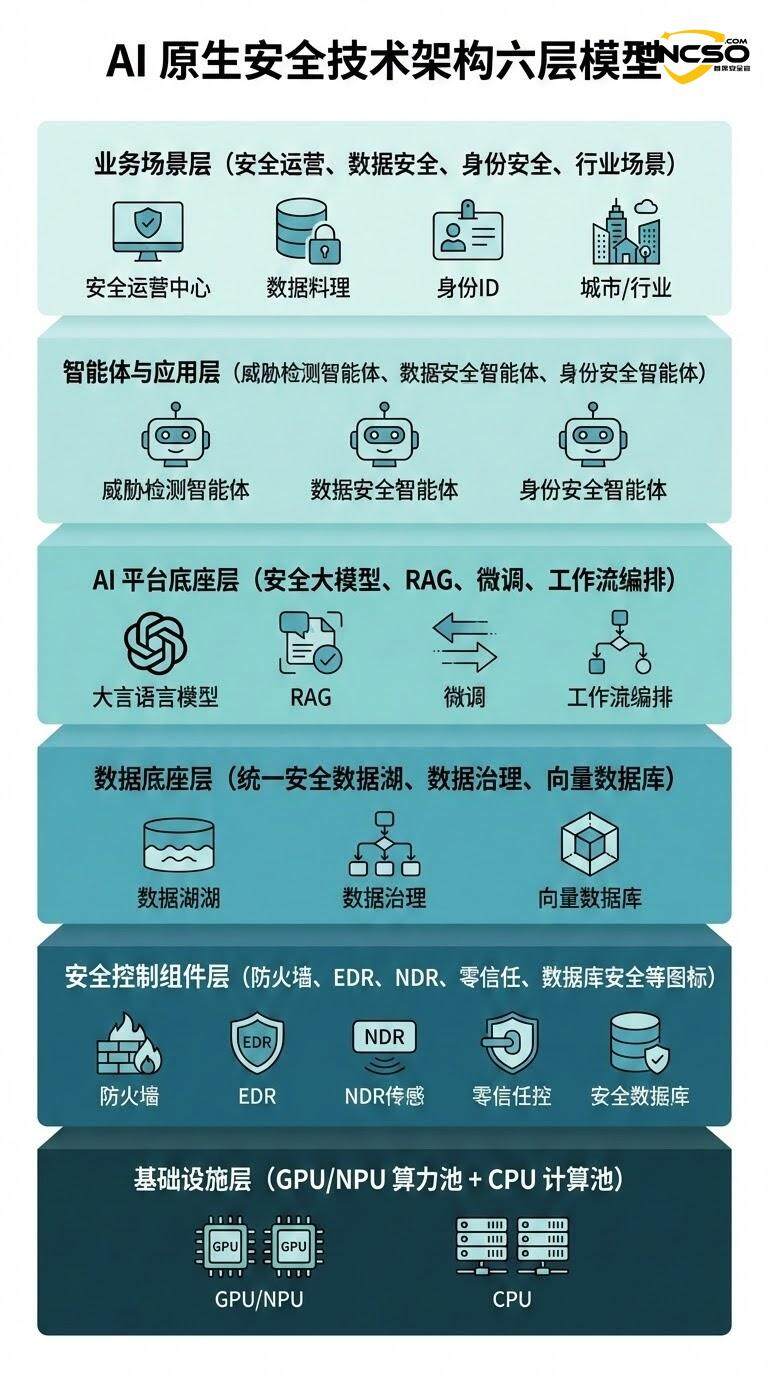
Tier 1: Infrastructure Tier (computing and smart computing convergence)
-
GPU/NPU Smart Pools: Carry large model inference, fine-tuning training. Support NVIDIA, domestic chips and other kinds of hardware.
-
CPU computing pool: Carries traditional security applications, data storage, and query aggregation.
-
network infrastructure: Traditional network security products such as firewalls, DDoS protection, WAF, routing and switching.
Layer 2: Security Control Component Layer (Modularization and Openness)
-
Terminal/Host Components: EDR, terminal management, antivirus.
-
network component: Firewalls, IPS, IDS, NDR.
-
Data/Business Components: database auditing, database security, SDP, zero trust.
-
Asset/management components: Asset management, vulnerability scanning, CMDB.
Key changes: These components gradually provide standardized API interfaces to support direct invocation of large models; some of the small models can be embedded inside the components to achieve edge reasoning.
Tier 3: Data base layer (harmonization, governance, empowerment)
-
unified data lake: Aggregate data from multiple sources such as networks, endpoints, assets, services, threat intelligence, etc.
-
data governance: Data collection specification, field mapping, cleaning and processing, quality assurance.
-
feature engineering: Data vectorization, feature extraction, and providing input to models.
-
vector database: Store embedding to support efficient retrieval of RAGs.
Design Principles: Collect once, use many times. Various large models and applications share the same data base to avoid duplicate docking.
Layer 4: AI platform base layer (capabilities and services)
-
Large Model Service: security base big model, vertical domain big model (threat detection,Data Securityetc.), open source models (DeepSeek, Qwen, LLaMA, etc.).
-
RAG services: knowledge base management, vector retrieval, contextual enhancement.
-
fine-tuning service: Data preparation, training, evaluation, deployment.
-
Prompt Engineering: System cue word design, Few-shot example, output format control.
-
Intelligent Body Development Framework: Agent design, tool binding, workflow orchestration, multi-round interaction.
Layer 5: Intelligentsia and Application Layer (robot-oriented design)
-
Standardized Safety Intelligence: Threat Detection Response Intelligence, Identity Security Intelligence, Data Security Intelligence, and more, right out of the box.
-
Customized Intelligentsia: Personalized intelligences built by users based on the framework, such as "business anomaly monitoring", "HW duty assistant", etc.
-
Collaboration and organization: Multi-intelligentsia collaborate through event-driven, message queuing and other mechanisms to form a complete workflow.
Layer 6: Business Scenario Layer (Vertical Enablement)
-
Safe operation: Intelligent body-based daily alarm handling, event research and report generation.
-
Data Security: Data asset identification, access behavior monitoring, and sensitive information protection.
-
identity security: Permission governance, abnormal behavior detection, access control.
-
Other Scenes: application security, container security, IoT security, etc.
3.3 Typical Evolutionary Paths for Security Applications and Architectures
The evolution from "traditional NOW security system" to "AI-native Future security system" can be divided into the following stages:
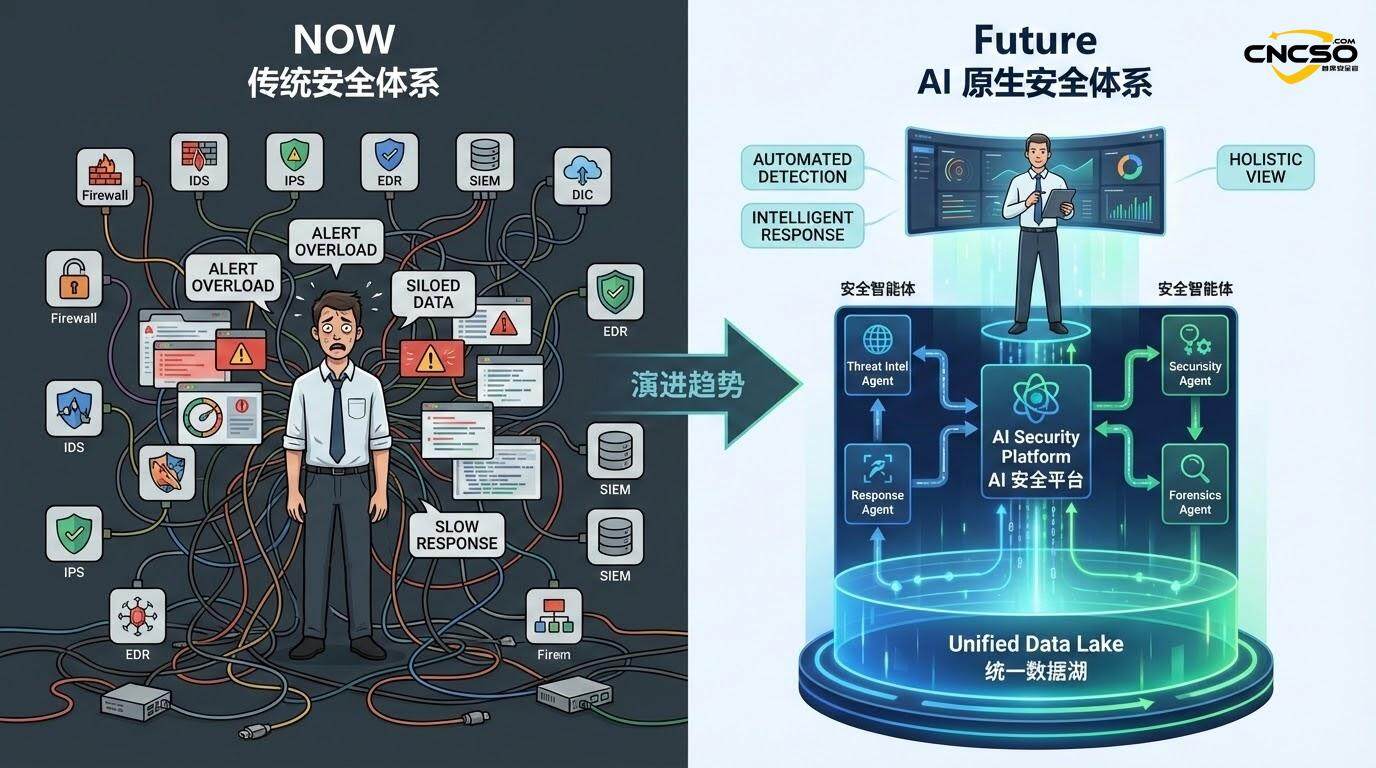
NOW security system (status quo):
-
People layer: security analysts, SOC operators, infrastructure administrators.
-
Process layer: alarm review, log query, manual research, manual response.
-
Rule layer: detection rules, alarm screening rules, whitelist rules.
-
Logging layer: network logs, terminal logs.
-
Control layer: decentralized components such as firewalls, IPS, EDR, etc.
Future security system (target):
-
People layer: security architects, AI engineers, smart body operators.
-
Process layer: intelligences do most of the work autonomously, with the exception of human supervision.
-
Intelligent Body Layer: multiple domain intelligences (detection class, data security class, identity security class, etc.).
-
Data Layer: unified data lake to support sharing by multiple intelligences.
-
Control layer: collaborates with intelligences through standardized interfaces.
4. AI Security PlatformHow to land
4.1 Phased construction route
The landing of the AI security platform is not a quick fix, but should follow a progressive, iterative approach and be advanced in three stages:
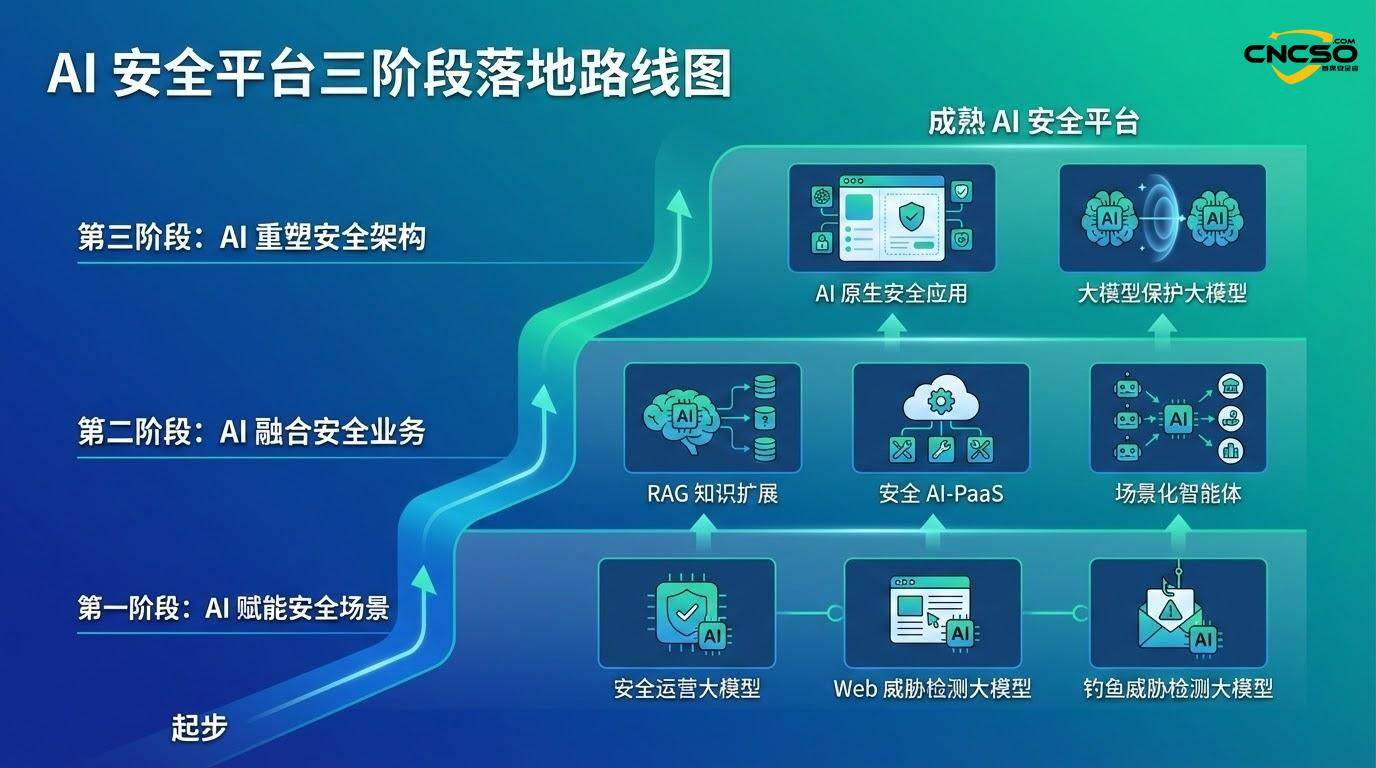
Phase I: AI-enabled security scenarios (basic capacity building, 6-12 months)
goal: Quickly validate the value of AI in specific security scenarios to build confidence.
Key tasks:
-
Construction of the basic framework of the security macromodeling system
-
Build a data base: determine data collection specifications, storage architecture, and governance processes.
-
Build a large model base: select the base model (you can use Deep Security large model, open source model, etc.) and deploy the inference service.
-
Setting up the infrastructure: preparing GPU arithmetic resources, monitoring and alerting systems.
-
-
Data Docking Specification Design and Governance Efforts
-
Model/platform/component data specification alignment: define data fields, formats, flows.
-
North-south interface opening: ensure that data can flow into the platform from components and model results can be fed back to components.
-
SOAR integration, work order process docking, etc.: a complete link to automated disposal.
-
-
First out-of-the-box models go live
-
prioritizeHigh-value, easy-to-see scenarios:
-
The Great Model of Safety Operations: Alarm classification, correlation, root cause mining, and decision-making suggestions. Effectiveness: Accuracy rate of 95%, significantly reducing false alarms.
-
Web Threat Detection Big Model: WebShell, injection, XSS and other attacks detection. Effectiveness: Accuracy rate 98%.
-
Phishing Threat Detection Large Model: Email content semantic recognition, URL detection, attachment analysis. Effectiveness: 2400+ phishing emails detected, 95% detection rate against attacks.
-
-
Expected results: Users can intuitively feel the effects of AI (significant reduction in alarms, shorter analysis time, increased detection of vulnerabilities) and gain acceptance for subsequent investments.
Phase II: AI-integrated security operations (performance optimization, 12-24 months)
goalDeepen the integration of AI and security business to realize the "breakthrough" effect, from single-point breakthrough to system optimization.
Key tasks:
-
Model effect tuning optimization
-
Create a continuous feedback loop: collect user false alarm labeling, operational feedback.
-
Model upgrade iteration: online learning, retraining, version update based on feedback data.
-
Customized Specification Import: Import enterprise-specific safety specifications and business knowledge into the model to enhance the degree of adaptability.
-
-
Secure AI-PaaScustomized innovation
-
RAG ExtensionUsers can import enterprise security specification documents, asset management documents, and security knowledge bases, so that the model "understands the business".
-
Workflow definitions: Users define personalized workflows for security intelligences based on the platform framework.
-
Scenario-based application developmentCustomized intelligence such as "Asset Security Management", "Employee Security Assistant", "HW Watch", etc.
-
-
Deepen the application of AI+ security scenarios
-
Data Access Risk Megamodel: Identify anomalous data access behavior in real time and determine if there is a risk of leakage.
-
Permission and Behavioral Risk Mega Model: Monitor for abnormal privilege usage, abnormal logins, abuse of privilege usage, etc.
-
Ongoing assessment of the "AI Red Team": Penetration testing and vulnerability mining using large models on a regular basis to continuously improve the defense level.
-
Expected results: Multiple security scenarios to realize AI native applications, workflow automation rate of 70-80%, significant reduction in security operation costs, deepening user dependency.
Phase 3: AI reshapes security architecture (holistic transformation, 24+ months)
goal: Build a new type of security architecture with AI as the core to realize the optimal synergy of "human + AI".
Key tasks:
-
AI-enabled transformation of security operations
-
Transform traditional security platforms (SIEM, SOC, XDR, etc.) into AI-native applications.
-
Security applications and security intelligences go hand in hand to form an integrated solution.
-
The core of the architecture has changed from a "toolset" to a "network of intelligences".
-
-
Security AI-PaaS Customization Innovation Deepens
-
Users build more security intelligences for more verticals based on the platform.
-
Building industry-specific security macromodels through industry security corpus production and fine-tuning.
-
Forming a multi-level modeling system of industry-company-sector.
-
-
Big models protect big models
-
Big models within the enterprise need to be protected (prompt injection, jailbreaks, data leaks, etc.).
-
The security intelligences are supplied in MaaS mode through standard API interfaces to provide security protection for the big business models.
-
Form a complete closed loop covering "business AI generation → security AI detection → results return".
-
Expected results: Build a complete, AI-driven, highly automated security operations system; security staff focuses on architecture, knowledge coding, and decision oversight; AI takes on 95% or more of the day-to-day operations.
4.2 Typical scenarios of landing practice
To illustrate the value of AI security platforms in concrete terms, a few typical scenarios that have been validated in real-world deployments are listed below:
Scenario 1: Group-oriented security assistant intelligences
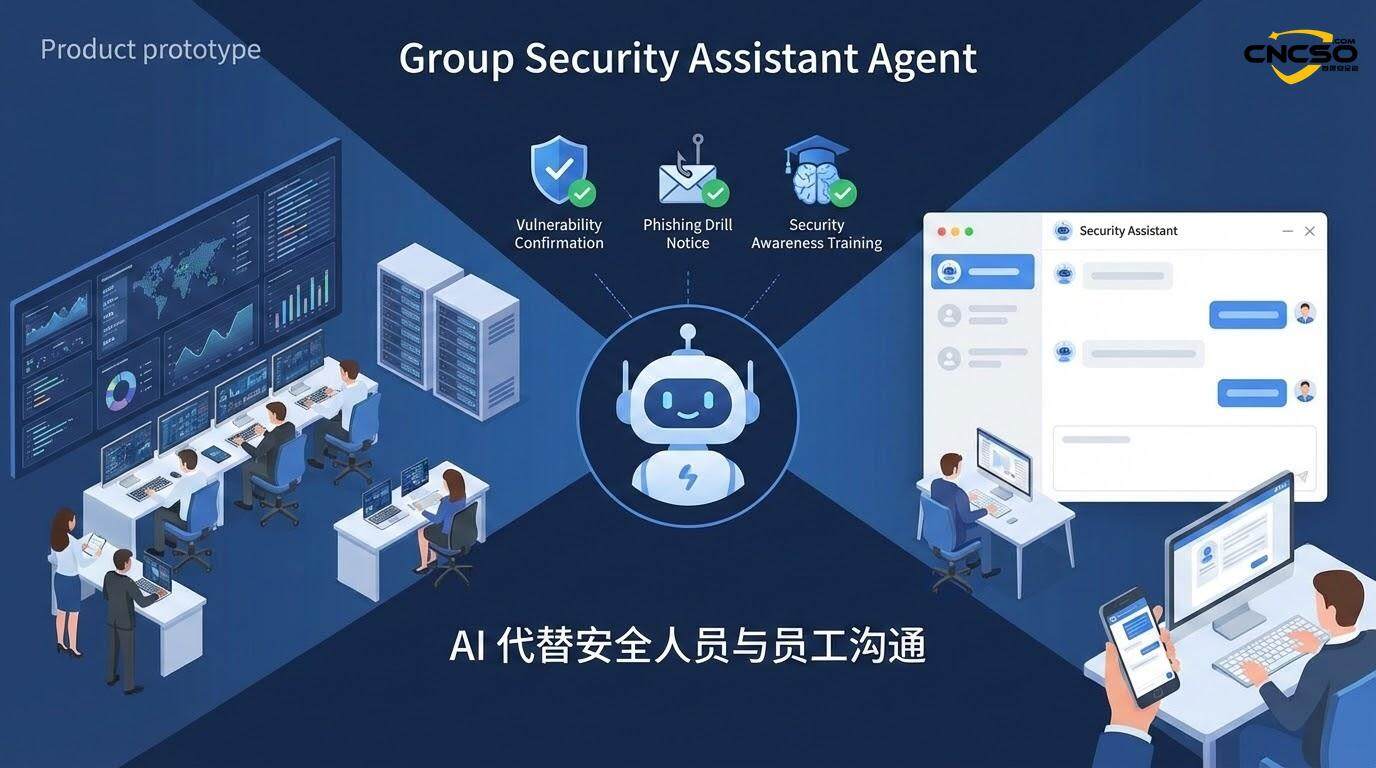
Business Pain Points:
-
After the security department discovers the vulnerability/invasion, it needs to communicate with the business department to investigate and follow up the work order, which takes up 1/3 of the security personnel's energy.
-
It is difficult to cover the whole company with phishing email drills, and the number of people who are hit is huge, so the workload for follow-up communication confirmation and awareness training is huge.
-
UEBA (User and Entity Behavioral Analysis) was significantly discounted due to the need for manual confirmation after an exception.
AI Assistant Program:
-
The big model is used to confirm exceptions, educate safety, and follow up work orders with regular employees through natural language conversations.
-
Security personnel will only intervene in exceptional circumstances.
Landed Value:
-
Greatly release the energy of security personnel, instead of manual completion of daily communication with employees.
-
Improve alarm closure rate, UEBA detection effectiveness, and phishing drill coverage.
-
Enhance the "presence" of the safety team and the high-frequency perception of safety work by the general staff.
Scenario 2: HW Manned Security Robot
Business Pain Points:
-
During the attack and defense drills (HW), security personnel spent a lot of time after arriving at 9:00 a.m. each day to perform rounds (alarms, traffic, scripts, missed sweeps, etc.), which resulted in an inability to respond to threats in a timely manner.
AI Robotics Program:
-
The inspection task is automatically started at 8:30 and the inspection report is generated.
-
This includes multiple dimensions such as alarm aggregation, traffic anomalies, detection rule backlogs, and missed sweep additions.
-
Security personnel view the report on arrival and go directly to threat analysis and disposal.
Landed Value:
-
Save time on trivial inspections 30-40%.
-
Improve the speed of emergency response and the efficiency of incident handling.
-
Reports are automatically generated and the workload for daily summaries is significantly reduced.
Scenario 3: Large Model Reasoning Security Intelligence Body
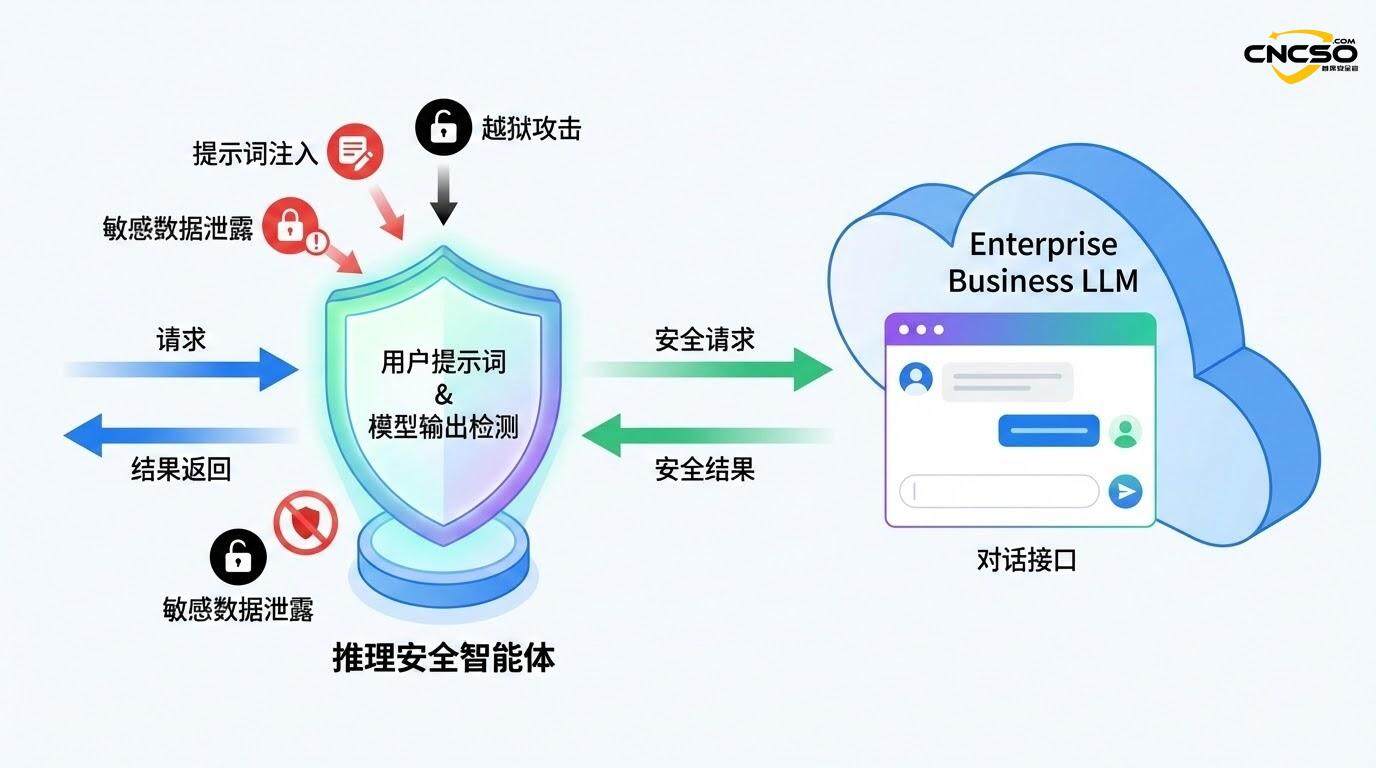
Business Pain Points:
-
Enterprises deploy open source big models to support all kinds of business applications.
-
Malicious users can perform prompt injection attacks that cause models to generate offending content, disclose sensitive information, execute malicious code, and more.
-
Lack of professional and efficient means of protection.
SafeSmart Solutions:
-
Multi-dimensional detection by security intelligences before user prompt words are fed into the business macromodel:
-
Cue word injection detection (identifying malicious commands, jailbreak attempts)
-
Compliance checks (checking for violations of safety norms)
-
Sensitive data detection (interception of leakage of sensitive fields)
-
Resource exhaustion detection (to prevent DoS attacks)
-
-
The output of the business grand model is also examined to prevent the generation of harmful content.
Landed Value:
-
Provide comprehensive security for enterprise AI applications.
-
Through the exposure of API interfaces, it realizes the protection of "security model" to "business model", forming the paradigm of "big model protects big model".
Scenario 4: Security Report Generation Intelligence
Business Pain Points:
-
Enterprises are required to prepare a variety of safety reports (daily, weekly, monthly, HW reports, inspection reports, etc.), which is a lot of work and repetitive.
-
It is difficult to standardize different reports with different formats and different content dimensions.
Intelligent Body Program:
-
User-defined report templates, key metrics, content structure.
-
Intelligent bodies automate the ground:
-
Retrieve required data (alerts, vulnerabilities, events, etc.)
-
Invoke multiple fine-grained large models for analysis (e.g., threat analysis models, statistical data models, etc.)
-
Summarize, organize, and embellish to generate the final report.
-
Landed Value:
-
Significantly reduce report writing workload.
-
Improve the quality and consistency of reporting.
-
Free up analysts to focus on higher-value work.
4.3 Multiple modes of cooperation
Enterprises can explore the following multifaceted collaboration approaches when building AI security platforms:
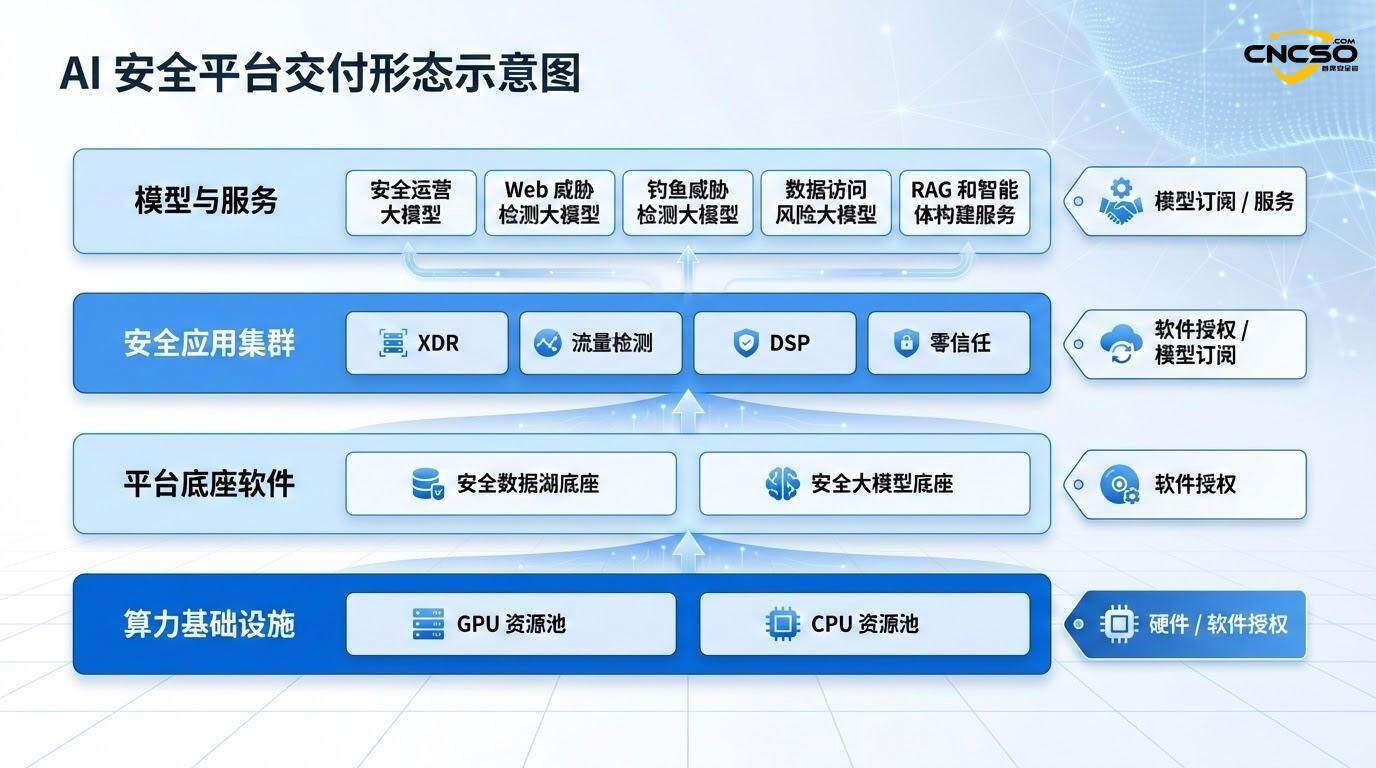
Joint technological innovation
-
AI+Security Research ProjectJointly apply for national and industry-level research projects, such as "Generative AI-driven Network Security Intelligent Detection".
-
Joint Innovation Laboratory: Collaborate with universities and research organizations on cutting-edge topics (e.g., counter-attacks, privacy protection, etc.).
Research on industry standards and norms
-
Conducting AI cybersecurity standards developmentParticipated in national and industry standardization of security AI, such as "Security Intelligence Interface Specification" and "Security Large Model Evaluation System".
-
Best Practice Outputs: Summarize lessons learned in practice and publish industry guidelines.
Talent cultivation and construction
-
Talent development for AI security jobs: Jointly train AI security engineers and security architects with universities.
-
Continuing Education Program: Provide AI transformation training for existing security practitioners.
Commercialization & Marketing
-
Industry Solutions Launched: Develop verticalized AI security solutions for key industries such as finance, power, and healthcare.
-
joint marketing: Co-exhibiting, publishing success stories, and conducting technical seminars.
5. Reference citations
Vaswani, A., et al. (2017). "Attention Is All You Need." Advances in Neural Information Processing Systems, 30.
OpenAI (2022-2024). ChatGPT Series Technical Reports and Technical Papers.
DeepSeek (2025). "DeepSeek-R1: A Reinforcement Learning Approach to Large Language Model Reasoning."
Gartner (2024). "2024 North America Security & Risk Management Summit - Technology Trends Report."
DeepService AI Security Platform - Live Deployment Statistics Report, 2024-2025.
MITRE ATT&CK Framework and Cyber Kill Chain Analysis - Security Operations Best Practices.
Analysis of Enterprise Security Investment and Operational Effectiveness - Research Data Based on a Sample of 1000+ Domestic Enterprises, 2024.
DeepSecurity Security Intelligence Body Typical Application Cases Database - covering a wide range of vertical areas such as security operations, threat detection, data security, identity security, and so on.
DeepSign's "AI Security Platform Construction White Paper" - technical architecture, phased construction routes, and landing content examples explained in detail.
ISO/IEC 27001, NIST Cybersecurity Framework and National Critical Information Infrastructure Protection Regulations.
Original article by Chief Security Officer, if reproduced, please credit https://www.cncso.com/en/ai-security-platform-implementation.html