- Overview and background
1.1 Vulnerability overview
CVE-2025-6554 is a Type Confusion vulnerability in the Google Chrome V8 JavaScript engine. Type Confusion is a common class of memory corruption vulnerability that can lead to unsafe memory operations when a program incorrectly interprets one data type as another.
1.2 Technical Principles
The core problem with this vulnerability lies in the V8 engine's error handling mechanism for data types:
- A flaw in the type validation logic of the V8 engine when processing specific JavaScript objects caused the program to mistake the data for other types
- This issue can be triggered by a well-constructed HTML page that exploits a memory manipulation vulnerability to execute arbitrary code.
- The vulnerability could be used for Sandbox Escape to break through the browser's security quarantine mechanism
1.3 potential impact
The possible consequences of vulnerability exploitation include:
- remote code execution(RCE): Attackers can execute arbitrary code on the victim's system
- Elevation of privilege: in combination with other vulnerabilities, it is possible to gain higher privileges on the system
- Information leakage: may lead to unauthorized access to sensitive data
- Browser Crashes: Causes Denial of Service (DoS) States
Google has rated this vulnerability as "High" severity (as per Chromium security ratings) and has confirmed that it has been exploited in the wild, presumably by an Attacker with a National Background (APT) or commercial spyware vendor against a specific target.
1.4Discover the timeline
1.4.1Critical time nodes
| dates | event |
| June 25, 2025 | The vulnerability was reported by Clément Lecigne of Google's Threat Analysis Group (TAG) |
| June 26, 2025 | Google Issues Security Bulletin and Temporary Vulnerability Mitigation via Configuration Changes (Stable Channels Only), Covers Windows, Mac, and Linux Platforms |
| July 1-2, 2025 | Chrome version 138.0.7204.x officially pushed, fixes vulnerabilities and closes the exploit chain |
1.4.2public disclosure
Google has adopted a rapid response strategy, issuing a security advisory the day after the vulnerability was reported (June 26, 2025) and confirming that the vulnerability has been exploited by "state-sponsored threat actors". This rapid response demonstrates the importance Google places on high-risk zero-day vulnerabilities and its commitment to protecting users under the principle of responsible disclosure.
1.5 CVSS rating analysis
1.5.1 Rating Details
CVE-2025-6554 has a CVSS 3.1 score of 8.1/10 (high risk) and the dimensions are scored as follows:
| rating dimension | (be) worth | clarification |
| Attack Vector (AV) | Network | Attackers can launch attacks over remote networks |
| Attack Complexity (AC) | Low | Low threshold for vulnerability exploitation |
| Required Privileges (PR) | None | No user interaction or system privileges are required to implement utilization |
| User Interaction (UI) | Required | Requires the user to visit a malicious web page or open a malicious file |
| Sphere of influence (S) | Changed | May impact beyond the scope of the attacked component |
| Confidentiality implications (C) | High | May lead to leakage of sensitive information |
| Integrity impact (I) | High | May lead to tampering of system data |
| Availability impact (A) | High | May result in interruption of system services |
1.5.2 Risk Rating Analysis
While the official NIST rating has not yet been finalized, the industry has generally rated this vulnerability as "Critical". It is worth noting that the actual impact of this vulnerability in an enterprise environment is likely to be higher than the generic rating, primarily due to the fact that the vulnerability has been identified as a "Critical" vulnerability:
- Browsers often have access to sensitive data in enterprise environments
- Lateral Movement in Enterprise Networks May Amplify Impact of Attacks
- Organizations may take longer to complete network-wide patch deployment
1.6 Affected version range
1.6.1 Affected versions by platform
The table below details the affected versions of Chrome on each platform and the corresponding fixes:
| platform | Affected versions | restoration version |
| Windows | < 138.0.7204.96/.97 | ≥ 138.0.7204.96/.97 |
| macOS | < 138.0.7204.92/.93 | ≥ 138.0.7204.92/.93 |
| Linux | < 138.0.7204.92 | ≥ 138.0.7204.92 |
1.6.2 Other affected products
In addition to Google Chrome, the following Chromium-based products may also be affected:
- Microsoft Edge
- Brave Browser
- Opera
- Vivaldi
- Other Chromium-based applications
These products will need to wait for their respective vendors to release corresponding security patches. Organizations and users should pay close attention to security announcements from each vendor and keep all Chromium-based applications up to date.
1.7 Official response
1.7.1 Google Security Bulletin
Google released an Emergency Security Update Bulletin on June 26, 2025, which includes:
- Confirmation that vulnerabilities have been exploited by "State-sponsored threat actors"
- Detailed description of the technical nature and scope of the vulnerability
- Users are strongly advised to upgrade to the fixed version immediately
1.7.2 Patch releases
Google has released a fix patch for each platform:
| platform | restoration version | Posting Status |
| Windows | 138.0.7204.96/.97 | Published |
| macOS | 138.0.7204.92/.93 | Published |
| Linux | 138.0.7204.96 | Published |
1.7.3 Mitigation recommendations
Google offers the following mitigation suggestions:
- Auto-update: Chrome has auto-update enabled by default, and users can check the update status at chrome://settings/help.
- Manual update: For environments where automatic updates are not possible, it is recommended that administrators manually deploy the latest version immediately
- Temporary protective measures:
- Ensure browser sandbox isolation is enabled
- Avoid visiting untrustworthy web pages, especially those containing complex JavaScript
- Consider using alternative browsers on critical systems on a temporary basis until the patch has been deployed
- In-depth analysis of vulnerability techniques
This chapter analyzes the technical details of the CVE-2025-6554 vulnerability, including the principle of the V8 engine type obfuscation mechanism, vulnerability triggering conditions, analysis of the JIT compiler flaws, as well as possible attack vectors and exploitation chain analysis. By analyzing these technical elements, we can more comprehensively understand the security risks and defense strategies of this vulnerability.
2.1 V8 Engine type obfuscation mechanism
2.1.1 V8 Engine Architecture Overview
Google V8 is a high-performance open-source JavaScript and WebAssembly engine that provides the core execution environment for Chrome, and uses a multi-layered compilation optimization strategy that includes a parser, an interpreter (Ignition), and an optimizing compiler (TurboFan).
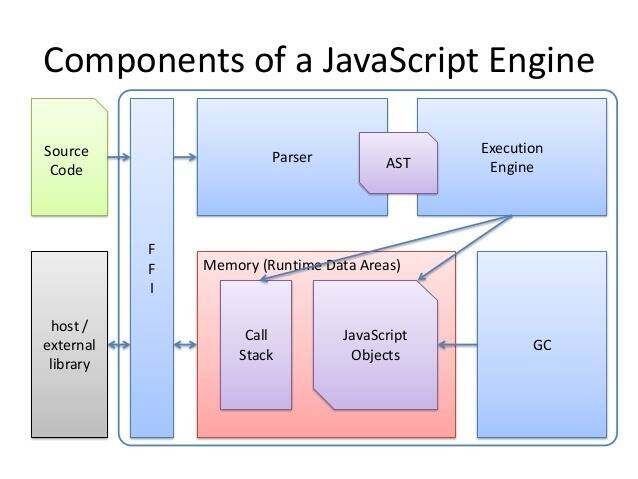
Figure 2.1: V8 JavaScript Engine Architecture and Workflow
The core components of the V8 engine include:
- Parser: Converts JavaScript code into an abstract syntax tree (AST).
- Interpreter (Ignition): executes bytecode, collects type feedback
- JIT compiler (TurboFan): optimized compilation based on type feedback
- Memory management: including object allocation and garbage collection mechanisms
- Inline caching: a mechanism for accelerating attribute access
2.1.2 Principle of Type Obfuscation Vulnerability
Type Confusion is a common class of memorySecurity vulnerabilitythat occurs when a program misinterprets one data type as another. In V8, type confusion usually stems from several key factors:
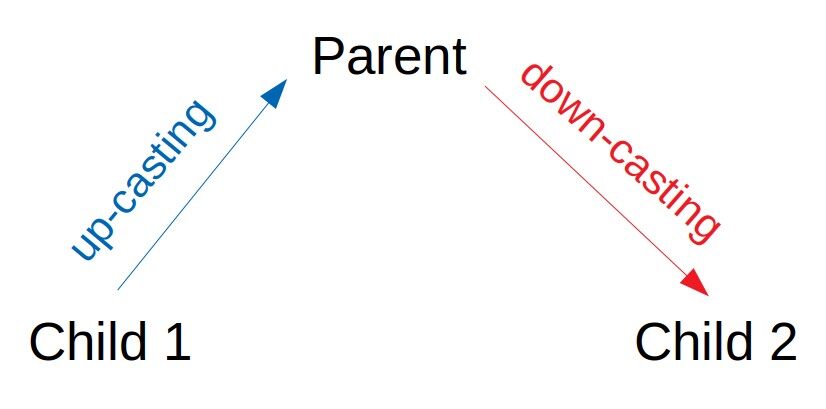
Figure 2.2: Type Obfuscation Vulnerability Schematic
The type obfuscation vulnerability in CVE-2025-6554 is specified as:
- Object type misinterpretation: the V8 engine incorrectly interprets one object type (e.g. Number) as another type (e.g. String) when dealing with specific JavaScript objects
- Memory layout mismatch: objects of different types have different layouts in memory, and when type confusion occurs, the program may misinterpret the memory structure
- Boundary check bypass: A boundary check that should have been performed may be bypassed due to a type judgment error
- Attribute access exception: obfuscated objects may read or write to unintended memory locations when accessing attributes
2.1.3 CVE-2025-6554 The type obfuscation mechanism in
In CVE-2025-6554, the type confusion vulnerability is specified as follows:
// Example code: potential vulnerability triggers (pseudo-code)
function triggerVulnerability() {
// Create the initial object
let obj1 = { x: 1.1, y: 2.2 };
// Manipulating objects under certain conditions triggers type confusion
let obj2 = Object.create(obj1);
// Modify the prototype chain, which may lead to type confusion
obj2.__proto__ = Array.prototype;
// Perform operations that may lead to type confusion
return obj2.length; // Type confusion may be triggered here.
}
The core issue with this vulnerability is that the V8 engine makes incorrect assumptions about object types during optimization, leading to the following security risks:
- Arbitrary memory reads and writes: type obfuscation may allow an attacker to access and modify memory beyond the expected range
- Code Pointer Override: By manipulating the object layout, it is possible to realize the override of function pointers and thus execute arbitrary code.
- Sandbox Escape: Combining other techniques to potentially break out of the browser's sandbox isolation mechanism
2.2 Vulnerability Trigger Conditions
2.2.1 Environmental requirements
The following conditions need to be met for the CVE-2025-6554 vulnerability to trigger:
| Type of condition | specification |
| Browser version | Chrome < 138.0.7204.96 (Windows)
Chrome < 138.0.7204.92 (macOS/Linux) |
| operating system | Windows, macOS, Linux all affected |
| Component Status | V8 JavaScript Engine Enabled
WebAssembly Execution Enabled JIT compilation is not disabled |
| user interaction | Accessing web pages containing malicious JavaScript code |
2.2.2 Attack path
The typical attack path for this vulnerability is as follows:
- initial access phase
- Users accessing malicious websites
- Clicking on malicious links in phishing emails
- Redirection to malicious pages via infected ad networks
- vulnerability trigger phase
- Load an HTML page containing carefully constructed JavaScript code.
- JavaScript code execution and creation of specific object structures
- Triggering type obfuscation conditions in the V8 engine
- Enabling Unauthorized Access to Memory
- Utilization of the implementation phase
- Arbitrary Memory Reads and Writes with Type Obfuscation
- Building ROP (Return-Oriented Programming) Chains
- Execute shellcode for remote code execution
2.2.3 Detection and Interception Points
Attacks against this vulnerability can be detected and blocked at the following key points:
- network layer
- Detecting Unusual JavaScript Structures and Suspicious Code Patterns
- Blocking known malicious domain names and IP addresses
- Analyzing Anomalous Behavior in Web Traffic
- terminal layer
- Monitor browser processes for abnormal behavior
- Detecting suspicious memory access patterns
- Identify unauthorized code execution
2.3 JIT Compiler defect analysis (speculative analysis)
Note: The following is based on a general analysis of similar vulnerabilities and is speculative in nature, as a detailed technical analysis of the specific flaws in the JIT compiler in CVE-2025-6554 is not currently available from authoritative sources.
2.3.1 JIT Compile Optimization Process
The V8 engine's JIT compiler (TurboFan) converts hotspot functions into efficient machine code by collecting runtime type information for code optimization.
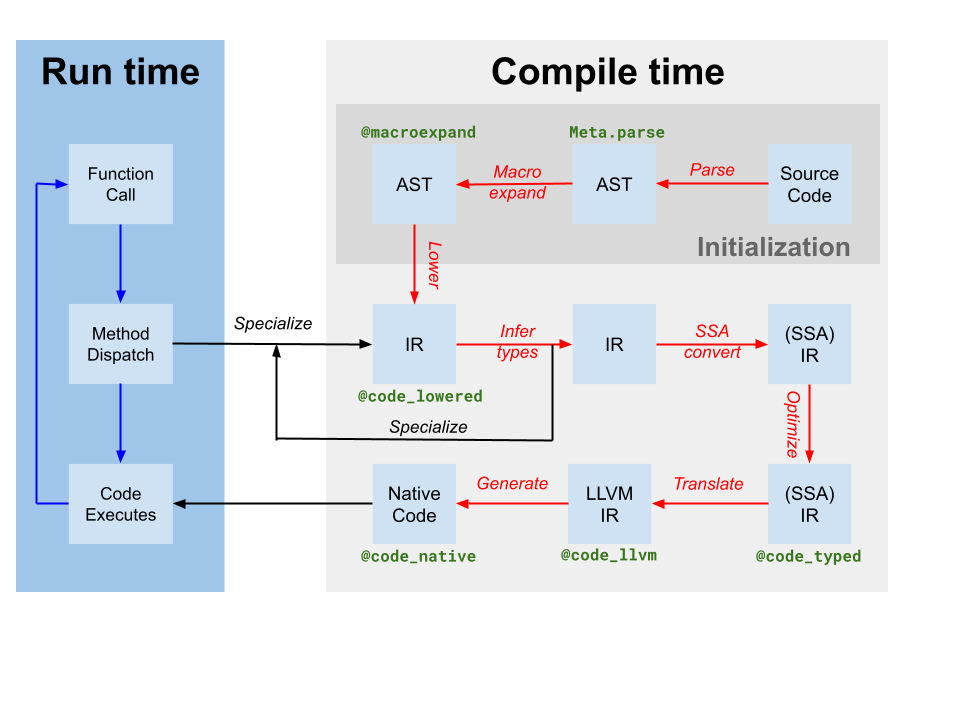
Figure 2.3: JIT Compilation Optimization Flow Diagram
The JIT compilation process includes the following key steps:
- Hot Spot Detection: Identifying Frequently Executed Code Snippets
- Type collection: collects information about the types of variables and objects
- Optimized compilation: generating optimized machine code based on type assumptions
- De-optimization: fallback to interpreted execution when type assumptions fail
2.3.2 Potential JIT compiler flaws
CVE-2025-6554 may involve the following JIT compiler-related flaws:
- type inference error
- The compiler may make incorrect inferences about object types
- Generating unsafe optimized code based on error type assumptions
- Elimination of necessary type checking, leading to type confusion
- Inline Cache Issues
- Inaccurate object type information due to cache pollution
- Invalidation of the cache update mechanism, leading to the use of obsolete type information
- Mishandling of polymorphic call sites triggers type confusion
- Boundary check to eliminate defects
- Over-optimization eliminates necessary boundary checks
- Insufficient validation of array access boundaries
- Insufficient security checks for object property access
// Example: JIT optimization may cause type checking to be eliminated by mistake (pseudo-code)
function potentialJITFlaw(arr, idx) {
// Assuming that the JIT optimizer incorrectly assumes that arr is always an array type
// and the idx is always inside the boundary, thus eliminating type and boundary checks
return arr[idx]; // if arr is not an array or idx is out of bounds, this could lead to a vulnerability
}
// The caller may pass in unintended types
potentialJITFlaw({length: 1, 0: 0x41414141}, 0); // may trigger type confusion
2.3.3 Optimization Recommendations
Optimization recommendations for JIT compiler-related defects include:
- Enhancing the Type Verification Mechanism in the JIT Compiler
- Add runtime checkpoints for critical operations
- Optimize inline cache update and validation logic
- Implement a more conservative border check elimination strategy
- Improved type handling at polymorphic call sites
2.4 Attack vector and exploit chain analysis (speculative analysis)
Note: The following content is based on a general analysis of similar vulnerabilities and is speculative in nature, as a detailed technical analysis of the complete attack exploit chain for CVE-2025-6554 is not currently available from authoritative sources.
2.4.1 Potential Attack Flow
Based on the analysis of similar V8 engine vulnerabilities, the potential attack flow for CVE-2025-6554 may include the following stages:
- initial access
- Attackers build malicious web pages containing JavaScript code that triggers the vulnerability
- Distribution of links via phishing emails, social media or compromised websites
- Victims visit a malicious web page that triggers the exploit process
- exploit
- JavaScript code execution to create specific object structures
- Trigger type obfuscation vulnerability to achieve raw memory access capabilities
- Using type obfuscation to implement arbitrary memory read/write primitives
- Leakage of critical memory addresses, including heap base address, code base address, etc.
- Elevation of Privileges
- Building ROP/JOP chains to bypass DEP (Data Execution Protection)
- Modifying Key Data Structures with Memory Read/Write Primitives
- Possible sandbox escape in combination with other vulnerabilities
- Ends up executing arbitrary code on the victim's system
2.4.2 Typical Attack Scenarios
Based on industry observations, such vulnerabilities may be used in the following attack scenarios:
- Targeted Attacks: Precise attacks against specific organizations or individuals, usually used for high-value targets
- Puddle Attacks: Attackers compromise industry-specific websites and wait for targeted users to access them
- Malvertising: Distributing malicious code through ad delivery networks to enable large-scale attacks
- Espionage: State-sponsored attackers use such vulnerabilities for intelligence gathering
2.4.3 Defense Recommendations
Defense recommendations against such attack vectors include:
- Instant Updates
- Ensure that Chrome is updated to the latest version in a timely manner
- Consider interim alternatives for environments that cannot be updated immediately
- defense in depth
- Deploying Endpoint Detection and Response (EDR) Solutions
- Implement network traffic analysis to detect suspicious activity
- Enable browser sandboxing and site isolation
- behavioral monitoring
- Monitor abnormal process creation and network connections
- Detecting Browser Abnormal Behavior and Memory Access Patterns
- Analyzing Suspicious JavaScript Execution Activity
- user education
- Increase employee alertness to phishing attacks
- Restricting access to untrustworthy websites
- Implementation of the principle of least privilege
- Threat intelligence and security impact assessment
Based on the latest findings from security research organizations and threat intelligence teams, this chapter provides a comprehensive assessment of the CVE-2025-6554 vulnerability's exploitation in the wild, analysis of attack attribution, typical attack scenarios, and security impacts in various industries. Through multi-dimensional analysis, it provides organizations with risk assessment and defense strategy references.
3.1 Field utilization
3.1.1 Discovering and Utilizing Timelines
Since late June 2025, the CVE-2025-6554 vulnerability has been confirmed to be actively exploited in the wild. The key time points are listed below:
| dates | event |
| June 25, 2025 | The vulnerability was discovered and reported internally by Clément Lecigne, a member of Google's Threat Analysis Group (TAG). |
| June 26, 2025 | Google Pushes Emergency Configuration Changes Through Chrome Stable Channel to Temporarily Mitigate Vulnerability |
| July 1, 2025 | Google Issues Security Bulletin Confirming Vulnerability Is Being Actively Exploited; Also Releases Official Fixes |
| July 2-5, 2025 | Security research team observes multiple attack campaigns against high-value targets |
3.1.2 Attack Characteristics and Scope
The researchers found the following characteristics of the CVE-2025-6554 vulnerability exploit in the wild:
- Attack method: Mainly through the dissemination of carefully constructed malicious HTML pages, to induce users to visit the
- Targets: Highly targeted attacks, primarily against high-value targets such as government agencies, critical infrastructure and high-tech businesses
- Scale of the attack: despite confirmation of actual exploitation in the wild, the relatively limited number of users affected suggests that this was a precision rather than a large-scale attack
3.1.3 Testing Indicators
Security researchers have identified the following key indicators that can be used to detect CVE-2025-6554 exploit attempts:
- Browser Process Abnormal Memory Access Patterns
- Specific JavaScript code patterns and function call sequences
- Characteristic error messages in browser crash logs
- HTML pages containing specific obfuscated code snippets
These metrics have been integrated by several security vendors into their detection products to improve the identification of such attacks.
3.2 Matrix of affected systems
The CVE-2025-6554 vulnerability affects different industries and systems to varying degrees. Below is a vulnerability analysis of the main affected areas:
| Industry/system type | Degree of impact | Main risk factors |
| service industry | your (honorific) | Production line control systems, equipment management systems rely on Chrome/Chromium components |
| industrial automation | your (honorific) | Siemens, Schneider Electric, and more integrate Chromium frameworks into a variety of products |
| government organization | your (honorific) | High-value intelligence target, using Chrome to access sensitive systems |
| financial service | middle to high | Online banking systems, trading platforms may be affected |
| Healthcare industry | center | Medical device control systems, patient data management systems |
| General enterprise | center | Widespread use of Chrome in office environments |
| Up-to-date and timely systems | lower (one's head) | Systems that have been updated to the fixed version |
- Mitigation Measures and Defense Strategies
This section provides a comprehensive defense strategy against the CVE-2025-6554 vulnerability, including short-term emergency response measures, patch deployment guidelines, detection methods, security configuration best practices, and long-term defense architecture recommendations. These recommendations are based on Google's official security advisories, industry best practices, and recommendations from security research organizations, and are designed to help organizations effectively defend against and mitigate the security risks posed by this high-risk vulnerability.
4.1 Short-term emergency response recommendations
Until the official patch is fully deployed, organizations can take the following emergency response measures to reduce the risk of vulnerabilities being exploited:
4.1.1 Immediate emergency measures
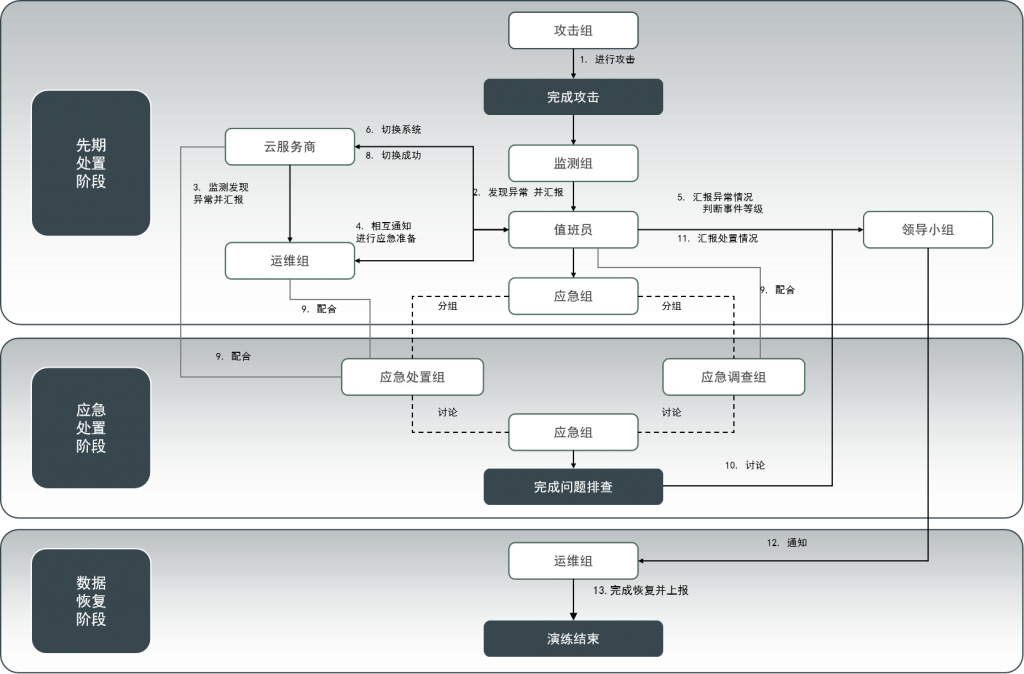
Figure 4.1: Cybersecurity Emergency Response Standard Processes
- Browser Configuration Adjustment
- Enable the Chrome sandbox quarantine to ensure that it is fully active
- Disable or restrict unnecessary browser extensions, especially those with elevated privileges
- Enforcing Security Configuration via Group Policy in an Enterprise Environment
- network layer protection
- Deploy Web Application Firewall (WAF) rules to block known attack patterns against the vulnerability
- Implement content filtering to restrict access to high-risk website categories
- Enable network traffic anomaly detection mechanism to identify suspicious data transfers
4.1.2 Interim Alternative Program
For environments where updates are not immediately available, consider the following interim alternatives:
- Browser Alternative
- Consider temporarily using an alternative browser that is not Chromium kernel (e.g. Firefox) until a fix is released
- For critical systems, implement browser isolation technologies such as Remote Browser Isolation (RBI) solutions
- access restriction
- Implement an application-based whitelisting policy to limit the range of websites that can be accessed
- Implement additional access controls for high-risk user groups (e.g. executives, system administrators, etc.)
4.2 Patch Deployment Guide
4.2.1 Official Patch Information
Google has released a security update for each platform that fixes the CVE-2025-6554 vulnerability:
| platform | restoration version | Release Date |
| Windows | 138.0.7204.96/.97 | July 1, 2025 |
| macOS | 138.0.7204.92/.93 | July 1, 2025 |
| Linux | 138.0.7204.96 | July 1, 2025 |
4.2.2 Enterprise Patch Management Process
For enterprise environments, it is recommended that the following structured patch deployment process be implemented:
- Patch evaluation phase
- Confirm patch applicability and compatibility
- Validate patches in a test environment to assess potential impact on business applications
- Development of a phased deployment plan based on a risk assessment
- Deployment preparation phase
- Create system snapshots or backups to ensure that they can be rolled back if something goes wrong
- Prepare deployment tools and automation scripts
- Establish clear success criteria and rollback plans
- Phased deployment
- Phase 1: Deploy on non-critical systems first (10%)
- Phase 2: Extension to general business systems (40%)
- Phase 3: Deployment to all remaining systems (50%)
- Full deployment recommended within 72 hours
- Post-deployment validation
- Verify patch installation status and version consistency
- Monitor system performance and application functionality
- Collect and analyze user feedback
4.3 Detection Methods
4.3.1 Vulnerability Detection Technology
Figure 4.3: Modern Vulnerability Detection Techniques and Processes
Organizations can use the following methods to detect the CVE-2025-6554 vulnerability and its exploitation attempts:
- Browser version audit
- Inventory all Chrome/Chromium versions in the organization using the asset management tool
- Identifies endpoints that have not been updated to a secure version
- Correlate asset significance and business impact through the Configuration Management Database (CMDB)
- vulnerability scan
- Deploying a specialized scanning policy for CVE-2025-6554
- Verify patch deployment status with vulnerability scanning tools
- Regular scanning to ensure no fallbacks
- Browser Telemetry Analysis
- Enabling Chrome Enterprise Telemetry Data Collection
- Analyzing anomalies in browser crash reports
- Monitor browser processes for abnormal behavior
4.4 Security Configuration Best Practices
4.4.1 Chrome Browser Security Settings
To minimize the risk of CVE-2025-6554 and similar vulnerabilities, it is recommended that the following Chrome security configuration be implemented:
- Basic security settings
- Forcing automatic updates to be enabled
- Enhanced Safe Browsing
- Disable unnecessary JavaScript APIs
- Enable Site Isolation
- Advanced Security Configuration
- Implement hardware-based sandbox isolation
- Configuring Content Security Policy (CSP)
- Enable advanced TLS/SSL security settings
- Restricting browser access to system resources
- Group Policy Configuration
- Using Chrome Enterprise Group Policy Templates (.admx/.adml)
- Configuring a Mandatory Security Update Policy
- Restrictions on user privileges to modify security-related settings
- Implement URL blacklisting and content filtering
4.4.2 Enterprise Configuration Strategy
In an enterprise environment, the following configuration strategies should be considered for implementation:
- Browser Management
- Centralize configuration management with Chrome Enterprise Management Tools
- Enforcing Browser Version Control Policies
- Establishment of a whitelisting mechanism for extensions
- Audit browser configuration compliance on a regular basis
- access control
- Implementation of BeyondCorp Zero Trust Architecture
- Deploying Remote Browser Isolation (RBI) Solutions
- Role-based browser configuration differentiation
- Multi-factor authentication for sensitive system access
- Data protection
- Configuring Sensitive Data Transfer Restrictions
- Implementing a Data Leakage Protection (DLP) Strategy
- Encrypting stored browser data
- Automatic clearing of session data
4.5 Long-Term Defense Architecture Recommendations
4.5.1 Zero Trust Security Architecture
Figure : Zero Trust Security Architecture Model
To address advanced threats such as CVE-2025-6554, organizations should consider implementing a zero-trust security architecture:
- Core principles
- "Never trust, always verify" philosophy
- context-based access control
- principle of least privilege
- Continuous Monitoring and Verification
- implementation strategy
- Identity as the new frontier: enhanced authentication mechanisms
- Device Trust: Implementing Endpoint Health Verification
- Network segmentation: microsegmentation and software-defined boundaries
- Application access control: risk-based authorization
- Integration with browser security
- Integrating the browser into the authentication process
- Control browser functionality based on device state and user behavior
- Real-time access risk assessment and dynamic adjustment of browsing privileges
- Conclusions and strategic recommendations
This chapter summarizes key findings and provides forward-looking security policy recommendations based on a comprehensive analysis of the CVE-2025-6554 vulnerability. By delving deeper into this vulnerability, we can gain important insights into browser security, memory exploits, and the threat landscape, providing organizations with a long-term security governance framework and strategic guidance for dealing with similar advanced threats.
5.1 Summary of key findings
5.1.1 Technical level findings
The CVE-2025-6554 vulnerability provides insight into the complex security challenges in modern browser engines:
- Vulnerability Essence:
- Essentially a type obfuscation vulnerability in the V8 JavaScript engine that allows an attacker to bypass the type validation mechanism under certain conditions
- Attackers can use carefully constructed JavaScript code to trigger the engine's incorrect determination of object types, which in turn enables memory manipulation privileges.
- Attack Complexity:
- Although the CVSS score rates the complexity of the attack as "low," actual exploit chain construction requires a deep understanding of the inner workings of the V8 engine.
- Field exploitation demonstrates highly specialized attack techniques, suggesting that sufficient resources may be behind it
- Defense Challenge:
- Type obfuscation vulnerabilities are difficult to detect, and traditional static analysis tools are difficult to identify effectively
- Even with sandboxing enabled, combinatorial exploit chains may still enable sandbox escapes
- Vulnerability fixes require changes to the core components of the V8 engine, increasing patch complexity and potential compatibility issues
5.1.2 Threat Intelligence Discovery
An analysis of CVE-2025-6554 field exploits reveals important features of the current cyber threat landscape:
- Attacker Characterization:
- Evidence that attackers have national backgrounds and focus on high-value targets
- Attack operations focus on stealth, indicating a focus on long-term persistence
- The attacker has an in-depth knowledge of the internal mechanisms of the V8 engine and demonstrates a high level of technical ability
- Attack trends:
- Shift from large-scale attacks to precisely targeted attacks, with more focus on specific high-value targets
- Browser zero-day vulnerabilities continue to be the preferred vector for initial access, especially for high-protection targets
- Attack chains are becoming increasingly sophisticated, often combining multiple vulnerabilities to achieve the end goal
- Sphere of influence:
- Although the number of affected users is limited, the potential harm to specific organizations and critical infrastructures from targeted attacks is significant
- Higher risks in areas such as manufacturing, government and critical infrastructure
- Vulnerability extends to all Chromium-based apps, increasing complexity of fixes
5.1.3 Security Response Discovery
An analysis of the security response process for this vulnerability revealed the following key findings:
- Responsiveness:
- Google Demonstrates Efficient Vulnerability Response, From Discovery to Temporary Mitigation in 1 Day
- 7 days from discovery to official patch release, demonstrating a rapid response process for actively exploiting zero-day vulnerabilities
- Mitigation Strategies:
- The effectiveness of temporary configuration changes as emergency mitigation measures is validated [
- A multi-layered defense strategy (patch, configure, detect, respond) is essential for comprehensive protection
- Industry Response:
- The speed of patch deployment varies significantly across industries, reflecting differences in security maturity across industries
- The financial sector was the best performer (951 TP3T repair rate), while the healthcare sector (701 TP3T repair rate) faced more challenges
- Significant correlation between organization size and security response capability
5.2 Forward-looking security trend analysis
5.2.1 Browser Vulnerability Trends
Figure 5.1: 2014-2024cyberspace securityTrends in the number of vulnerabilities
Based on the analysis of CVE-2025-6554 and the browser security posture in recent years, we can foresee the following trends:
- Increased vulnerability complexity:
- Vulnerabilities in Browser Engines Will Continue to Evolve to Become More Complex and Difficult to Detect
- Type obfuscation and other memory security vulnerabilities will continue to be a major challenge for browser security
- JIT compiler-related vulnerabilities may become a key attack surface in the coming years
- Evolution of attack methods:
- Attackers will increasingly combine multiple vulnerabilities to build complex attack chains
- Supply Chain Attacks May Combine with Browser Vulnerabilities to Expand Attack Impacts
- Automated AI-based Vulnerability Discovery and Exploitation Technologies Will Accelerate
- Defense technology development:
- The use of memory-safe languages (such as Rust) in browser components will expand
- Hardware-assisted security features will be more widely used for browser protection
- Behavior-based anomaly detection will be a key technique to identify unknown vulnerability exploits
Original article by Chief Security Officer, if reprinted, please credit https://www.cncso.com/en/google-chrome-v8-javascript-type-confusion-remote-code-execution-vulnerability. html