AI Security Risks
-
AI Safety Guide: 21 Risk Checklists and Defense Strategies for Artificial Intelligence Safety
Critical levels (6): cue injection, jailbreak cueing, AI supply chain compromise, training data poisoning, model inversion, deep faking
Advanced (10): model misuse, shadow cueing, cue obfuscation, adversarial cue chaining, internal misuse, regulatory non-compliance, AI social engineering, human error, watermark circumvention, algorithmic bias
Intermediate (4): data breach, brand damage, DoS attack, lack of auditability
Low-level (1): cross-model inconsistency -
AI Security:Artificial Intelligence AI Attack Surface Analysis Report 2026
In 2026, the AI security landscape is undergoing a fundamental reshaping. In response to a global cybersecurity talent gap of up to 4.8 million, organizations are massively deploying high-privilege, 24/7 running AI intelligences are becoming targets for attackers. However, these autonomous systems are also quickly becoming a focal point for attackers.Top security organizations such as Palo Alto Networks, Moody's, and CrowdStrike predict that AI intelligences will be the biggest insider threat facing enterprises by 2026. Traditional defense frameworks are failing and new governance systems and protection architectures have become necessary.
-
Artificial Intelligence (AI) Big Model Security Risks and Defense In-Depth Report
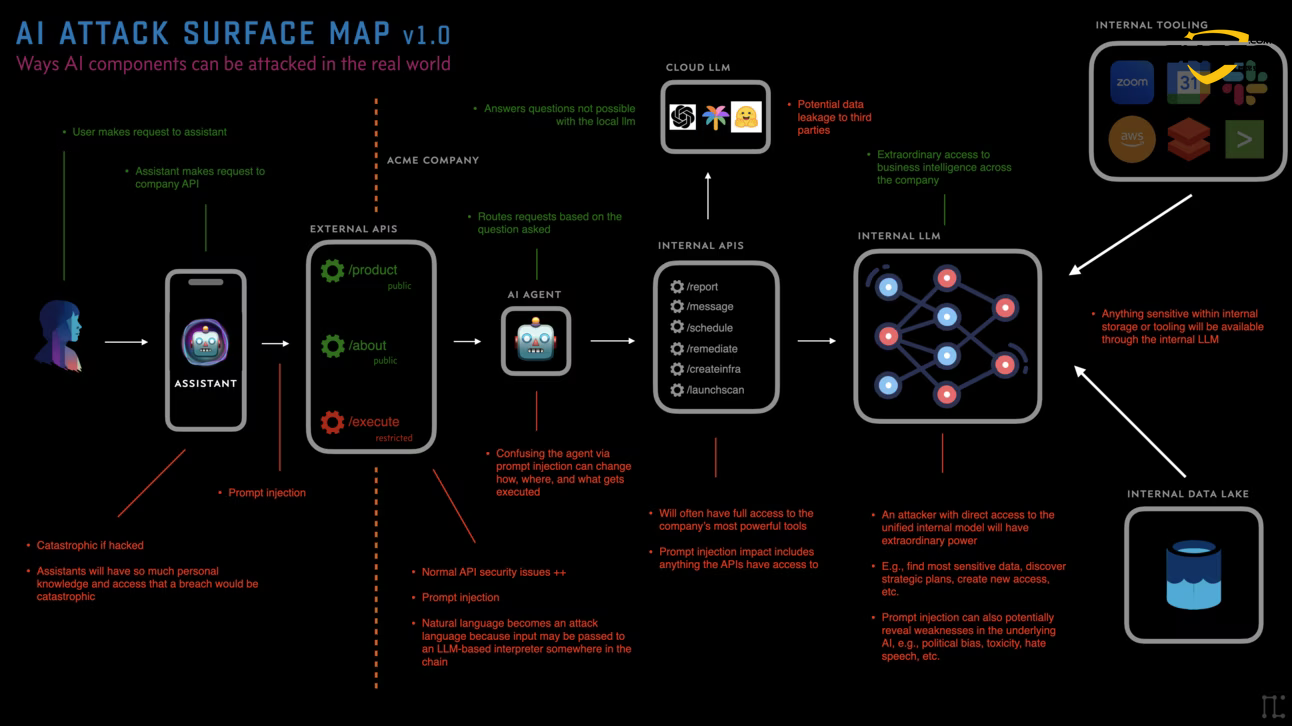
This report is based on the five core attack surfaces consisting of AI AI critical links from AI Assistants, Agents, Tools, Models, and Storage, with targeted security risks, defense architectures, and solutions.